 ...the monthly, Open Access Publisher.

Research Article - (2026) Volume 13, Issue 1
Received: 11-Aug-2026, Manuscript No. AJEWM-26-194548; Editor assigned: 14-Aug-2026, Pre QC No. AJEWM-26-194548 (PQ); Reviewed: 28-Aug-2026, QC No. AJEWM-26-194548; Revised: 10-Sep-0226, Manuscript No. AJEWM-26-194548 (R); Published: 17-Sep-2026
Introduction: Anticancer chemotherapy, although essential in cancer management, generates a substantial quantity of waste that is hazardous to human health and the environment. This waste, classified among Healthcare Waste with Infectious Risk (HCWIR) and hazardous chemical waste, requires rigorous management in accordance with specific standards. This study aimed to evaluate the management of anticancer chemotherapy waste in Dakar.
Methods: This was a descriptive cross-sectional study focusing on the organization of anticancer chemotherapy waste management in health facilities (public and private) in Dakar. The study was conducted from April 1 to April 30, 2025. A total of ten (10) health facilities (public and private) were identified in the Dakar region and constituted our sample.
Results: The types of waste generated in chemotherapy units were, in 70% of cases, empty vials of anticancer drugs, used ampoules and syringes, gloves and protective equipment (masks, gowns), infusion materials (tubing, filters), and residual contaminated waste (e.g., bags and compresses soaked with drug residues). The waste management steps were sorting, collection, secure transport, storage, and disposal. Approximately 80% of participants indicated that anticancer drug waste is not collected in specific containers. Waste is transported to the treatment area using bags in 50% of cases and dedicated carts in 30% of cases. Sixty percent (60%) of participants reported that incineration is the disposal method used for anticancer drug waste. The majority of staff (80%) have not received training in the management of anticancer drug waste. Protective equipment is provided in only 50% of facilities.
Conclusion: The management of waste generated by anticancer chemotherapy represents a major challenge for health facilities in Dakar, owing both to its toxicity and to its potential impact on public health and the environment.
Cancer is currently one of the leading causes of death worldwide, and its burden continues to grow in Africa, where over a million new cases were diagnosed in 2022 (Ugwu et al., 2026). In Senegal, the national cancer registry recorded 11,814 new cases that same year (Sow et al., 2026). In response to this rise, the use of chemotherapy has increased significantly in the capital’s oncology facilities particularly at the Joliot Curie Institute of the Aristide Le Dantec University Hospital, the country’s primary cancer treatment center even as the implementation of the national registry continues to face organizational shortcomings and a lack of dedicated funding.
However, anticancer drugs or cytotoxic agents are inherently hazardous substances: they are mutagenic, teratogenic, and potentially carcinogenic, posing risks to both patients and the healthcare professionals who prepare and administer them, as well as those who dispose of the resulting waste (Dugheri et al., 2023; Dugheri et al., 2024; Kweon and Robbins 2026). International consensus guidelines have been established to regulate the handling of these agents and prevent occupational exposure (Nabhani et al., 2020). Such exposure can occur at any stage of the medication management process including receipt, storage, reconstitution, and administration as well as during the handling of cytotoxic waste, the transport of excreta from treated patients, and the cleaning of contaminated surface (Liu et al., 2023). Consequently, managing this waste requires specific systems for sorting, packaging, storage, and disposal that are distinct from those used for other types of healthcare waste.
In sub-Saharan Africa, a recent systematic review of healthcare waste management practices revealed generally inadequate compliance levels among healthcare professionals, as well as several organizational and material factors contributing to these shortcomings (Berihun et al., 2025). In Senegal, several hospital-based studies particularly in Dakar and Ziguinchor have highlighted similar deficiencies in the biomedical waste management chain: Improper sorting, defective packaging, insecure storage, and disposal via rudimentary incineration methods (Ndiaye et al., 2012). However, this body of research focuses primarily on biomedical waste as a whole and rarely specifically addresses the management pathway for cytotoxic waste generated by cancer chemotherapy.
Yet, international literature emphasizes that cytotoxic waste requires enhanced protective measures and special vigilance due to its residual toxicity even after treatment administration (Dugheri et al., 2023; Dugheri et al., 2024)-and that improper management exposes not only healthcare staff but also patients, cleaning personnel, and the environment to significant health risks (Kweon and Robbins, 2026; Liu et al., 2023).
In the context of Dakar characterized by expanding oncology care services, increasingly diverse chemotherapy protocols, and sometimes limited human and material resources the issue of managing anticancer chemotherapy waste remains under-documented and warrants particular attention.
It is against this backdrop that the present study is conducted, aiming to examine the management of anticancer chemotherapy waste in Dakar. Specifically, the study seeks to describe current practices regarding the sorting, packaging, storage, and disposal of such waste in cancer care facilities; to identify key deficiencies and risk factors; and to propose context-specific improvements to enhance safety for patients, healthcare staff, and the community.
This was a descriptive cross-sectional study regarding the organization of waste management for anticancer chemotherapy in healthcare facilities (both public and private) in Dakar. The study was conducted from April 1 to April 30, 2025. A total of ten (10) healthcare facilities (public and private) in the Dakar region were identified and included in the sample. Participants included ward supervisors both male and female working in public or private facilities in Dakar who agreed to take part in the survey. A questionnaire was provided to the ward supervisors, and the objectives and importance of the study were explained to them beforehand. Interviews and data collection were carried out by a single individual. The survey took place during the five working days of the week and covered all individuals meeting our selection criteria. The study utilized a questionnaire designed to assess the knowledge and attitudes of chemotherapy staff regarding the management of waste generated in their departments. Data collection was managed using Excel software. Most of the graphs were created using Excel 2016. Data analysis was performed using SPSS (Statistical Package for the Social Sciences) Statistics version 27.
This study covered ten (10) facilities and achieved a response rate of 100%.
All surveyed individuals were nurses, representing a rate of 100%.
The number of men equaled the number of women, resulting in a sex ratio of 1 (Figure 1).
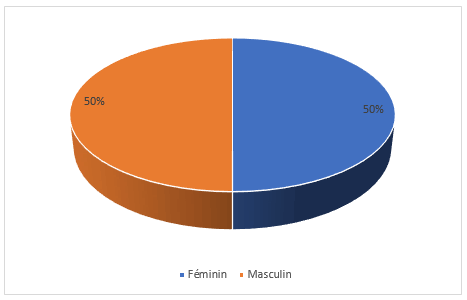
Figure 1. Distribution by gender.
Day hospitalization was the predominant type of care, accounting for 40%, while 10% consisted of outpatient care (Table 1).
| Type of care provided | Number | Percentage |
| Day hospitalisation | 4 | 40% |
| Outpatient care, full hospitalization, day hospitalization | 3 | 30% |
| Outpatient care | 1 | 10% |
| Outpatient care, full hospitalization | 1 | 10% |
| Outpatient care, day hospitalization | 1 | 10% |
| Total | 10 | 100% |
Table 1. Distribution by type of care provided.
Regarding the level of intervention, 70% involved the preparation, administration, and management of waste associated with the administration of anticancer drugs (Table 2).
| Level of involvement | Number | Percentage |
| Preparation of anticancer drugs, administration of anticancer drugs, management of waste related to administration | 7 | 70% |
| Preparation of anticancer drugs, administration of anticancer drugs | 2 | 20% |
| Administration of anticancer drugs | 1 | 10% |
| Total | 10 | 100% |
Table 2. Distribution by level of intervention.
The types of waste generated in chemotherapy units consisted of 70% empty anticancer drug vials, used ampoules and syringes, gloves and protective gear (masks, gowns), infusion equipment (tubing, filters), and residual contaminated waste (e.g., bags, pads soaked with products) (Table 3).
| Types of anticancer waste generated | Count | Percentage |
| Empty anticancer drug vials, used ampoules and syringes, gloves and protective gear (masks, gowns), infusion equipment (tubing, filters), residual contaminated waste (e.g., bags, product-soaked pads) | 7 | 70% |
| Empty anticancer drug vials, used ampoules and syringes, gloves and protective gear (masks, gowns), infusion equipment (tubing, filters) | 1 | 10% |
| Empty anticancer drug vials, used ampoules and syringes, gloves and protective gear (masks, gowns), infusion equipment (tubing, filters), residual contaminated waste (e.g., bags, product-soaked pads), drug packaging | 1 | 10% |
| Empty anticancer drug vials, used ampoules and syringes, gloves and protective gear (masks, gowns), infusion equipment (tubing, filters), residual contaminated waste (e.g., bags, product-soaked pads), infusion device | 1 | 10% |
| Total | 10 | 100% |
Table 3. Breakdown by waste type.
Approximately 80% of participants indicated that anticancer drug waste is not collected in specific containers (Table 4).
| Is anticancer drug waste collected in specific containers? | Count | Percentage |
| No | 8 | 80% |
| Yes | 2 | 20% |
| Total | 10 | 100% |
Table 4. Waste collection in specific containers.
Not all containers were clearly labeled to identify antineoplastic waste.
60% of participants reported that waste is not stored in secure areas (Table 5).
| Is waste stored in a secure area? | Count | Percentage |
| No | 6 | 60% |
| Yes | 4 | 40% |
| Total | 10 | 100% |
Table 5. Waste storage.
Waste is transported to the treatment area-50% using bags and 30% using dedicated carts (Table 6).
| How is waste transported to the treatment area? | Number | Percentage |
| Using dedicated carts | 3 | 30% |
| Using specific bags or containers | 5 | 50% |
| Treatment trays | 1 | 10% |
| Standard sorting bags | 1 | 10% |
| Total | 10 | 100% |
Table 6. Breakdown of waste by transport method.
The majority of transporters approximately 80% are not trained in the risks associated with anticancer drug waste (Figure 2).
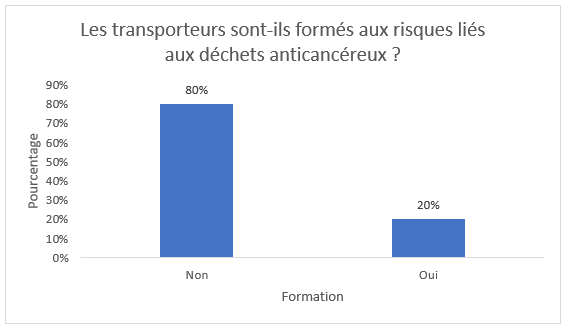
Figure 2. Training of transporters on the risks associated with anticancer waste.
The majority of participants (80%) stated that the waste is not disposed of in accordance with current standards (Figure 3).
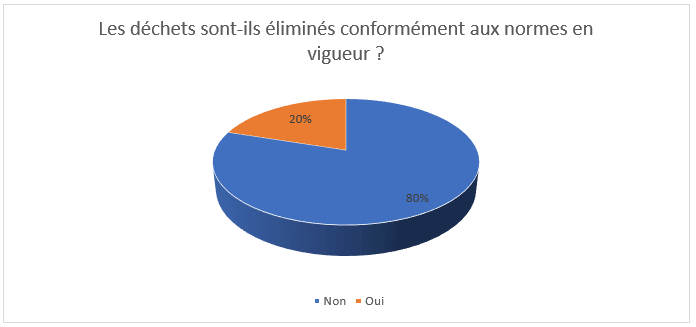
Figure 3. Waste disposal in accordance with current standards.
60% of participants reported that incineration is the disposal method used for anticancer drug waste (Table 7).
| What disposal methods are used for anticancer drug waste? | Count | Percentage |
| Incineration | 6 | 60% |
| I don't know | 2 | 20% |
| Chemical treatment | 1 | 10% |
| Garbage truck | 1 | 10% |
| Total | 10 | 100% |
Table 7. Waste disposal methods.
The majority of staff (80%) are not trained in the management of anticancer drug waste (Table 8).
| Is the staff trained in the management of anticancer drug waste? | Number | % |
| No | 8 | 80% |
| Yes | 2 | 20% |
| Total | 10 | 100% |
Table 8. Staff training on the management of anticancer drug waste.
According to 80% of respondents, awareness-raising sessions are not regularly organized (Table 9).
| Are awareness-raising sessions regularly organized? | Number | Percentage |
| No | 8 | 80% |
| Yes | 2 | 20% |
| Total | 10 | 100% |
Table 9. Staff awareness-raising sessions.
Only one facility has a written procedure for the management of anticancer drug waste, representing a rate of 10% (Table 10).
| Does the staff have a written procedure for the management of anticancer drug waste? | Number | Percentage |
| No | 9 | 90% |
| Yes | 1 | 10% |
| Total | 10 | 100% |
Table 10. Availability of a written procedure for the management of anticancer drug waste.
Protective measures are provided in only 50% of the facilities (Table 11).
| Are protective measures (gloves, masks, gowns) provided during the handling of anticancer drug waste? | Number | Percentage |
| No | 5 | 50% |
| Yes | 5 | 50% |
| Total | 10 | 100% |
Table 11. Protective measures during the management of anticancer drug waste.
Regular monitoring of waste management is carried out in only two facilities, representing a rate of 20% (Table 12).
| Is there regular monitoring of waste management practices? | Count | Percentage |
| No | 8 | 80% |
| Yes | 2 | 20% |
| Total | 10 | 100% |
Table 12. Monitoring of waste management practices.
Managing waste from cancer chemotherapy is a major public health and environmental issue. Classified as hazardous, this waste poses a high risk of toxicity, contamination, and pollution if not treated appropriately.
Our study, which aimed to evaluate chemotherapy waste management in Dakar, yielded several key findings. Ward supervisors were selected as the primary questionnaire respondents due to their pivotal position linking management, nursing staff, and technical departments. As those responsible for organizing daily patient care within the units, they play a crucial role in implementing medical waste management protocols. The study covered ten (10) facilities and achieved a 100% response rate. All surveyed individuals were nurses (100%). The gender distribution was equal, resulting in a sex ratio of 1. Regarding the type of care provided, day-case hospitalization was the most common (40%), while outpatient care accounted for 10%. In terms of involvement, 70% of respondents participated in the preparation, administration, and waste management associated with anticancer drugs. The waste generated in chemotherapy units consisted primarily (70%) of empty anticancer drug vials, used ampoules and syringes, protective equipment (masks, gowns, gloves), infusion equipment (tubing, filters), and residual contaminated waste (e.g., bags, pads soaked in the products).
Approximately 80% of participants indicated that anticancer drug waste is not collected in specific containers. The waste sorting phase is crucial for ensuring the effective management of chemotherapy waste. It is essential to properly separate waste based on its characteristics (infectious or non-infectious) and the appropriate method of recovery or treatment. About 15% of hospital waste is classified as hazardous (Prüss et al., 1999), highlighting the need for rigorous segregation to minimize the risks of infection and pollution. Sorting waste helps improve worker safety and reduce environmental impact. From an economic perspective, sorting reduces the volume of waste requiring treatment by 2% to 5%, offering financial benefits according to the WHO and UNEP (2005). The simplest method involves separating waste into specific containers, with sorting performed close to the point of generation. Color-coding simplifies waste sorting for hospital staff, ensuring that different waste types remain separated throughout the transport, storage, treatment, and disposal processes. Color-coding also serves as a visual indicator of the potential risk level associated with the waste inside each container.
All respondents confirmed that containers were not clearly labeled to identify anticancer drug waste. Waste labeling is essential to ensure the safety of handlers and to guarantee appropriate treatment and disposal. Labels must include information on the originating medical area, the date and time the container was sealed, the name of the person who filled out the label, and the appropriate international hazard symbol (Prüss et al., 1999). Containers must be correctly labeled to allow for rapid identification of their contents in the event of an accident and to facilitate appropriate response measures. For example, for bags that do not contain hazardous waste, it is mandatory to affix the "Non-hazardous healthcare waste" label. This measure is essential to ensure the safety of those handling such waste.
In our study, 50% of participants reported that waste is not stored in secure areas. It is recommended that waste be stored in utility rooms specifically designated for that purpose. This method keeps waste away from patients prior to its collection and transport to a centralized storage facility. This stage is commonly referred to as intermediate or short-term storage. According to 2005 WHO recommendations, this storage area must be disinfected regularly and possess sufficient capacity to hold the volume of waste generated by the healthcare facility.
Waste is transported to the treatment area using bags (50% of cases) or dedicated carts (30% of cases). Transporting waste within wards and to the central storage site is a high-risk activity, as it often involves manual handling or the use of carts, rolling tables, and wheelbarrows. Ideally, such transport should follow a route away from areas frequented by patients and visitors and be carried out with maximum safety using adjustable sanitary carts. These carts must be easy to load, unload, and clean. A study on waste management at the Ziguinchor Regional Hospital in southern Senegal also revealed risky transport conditions, involving the use of rolling tables and waste bins carried on the back or head (Ndiaye, 2003) A study in Mali showed that, in Bamako hospitals, transport to the disposal sites.
Storage handled by economic interest groups relies on manual handling, trolleys, and donkey carts (Sanogo et al., 2007). In our study, the majority of transporters approximately 80% have not received training on the risks associated with anticancer drug waste. Most participants (80%) stated that waste is not disposed of in accordance with current standards. 60% of participants identified incineration as the disposal method for anticancer drug waste. A study by Nianga demonstrated that incineration is the most commonly used method, accounting for 30.48% of cases (Mokoko et al., 2018). Similarly, a 2012 study by Ndiaye et al., (2012) reported that incineration was the primary disposal method in four out of five hospital facilities in Senegal. However, incineration is a significant source of atmospheric pollutants (Secretariat, 2025).
According to 80% of respondents, awareness-raising sessions are not held regularly. Only one facility has a written procedure for managing anticancer drug waste, representing a rate of 10%. We noted that protective measures are provided in only 50% of the facilities. The study by Ndiaye et al., (2012) in Dakar showed that personal protective equipment was available in only 45.3% of departments.
Regular monitoring of waste management is carried out in only two facilities, representing a rate of 20%. However, 80% of participants reported difficulties regarding the management of anticancer drug waste. Responses were offered quite readily, as it is generally easier to discuss what is going wrong than to propose solutions for overcoming these obstacles. An initial review reveals that the obstacles cited by questionnaire respondents are largely similar; despite the different facilities involved, common problems were highlighted. This demonstrates a degree of consistency regarding the difficulties encountered, indicating that the stakeholders clearly understand the factors hindering the integration of waste management strategies into their departments. The obstacles most frequently mentioned by the staff surveyed include: issues related to waste handling, transport, and disposal; a shortage of pharmacy technicians; a lack of specialized containers; the absence of written procedures; and insufficient training and awareness regarding anticancer drug waste management. The presence of a qualified individual to oversee chemotherapy waste management is crucial, as this person can help establish waste management protocols, train staff in safe handling and disposal, and supervise implementation. ndeed, a lack of awareness and poor waste-sorting practices can lead to inefficient and inappropriate waste management. It is therefore important to raise staff awareness regarding the need for systematic waste sorting to ensure safe disposal.
Managing waste from cancer chemotherapy poses a major challenge for healthcare facilities in Dakar, due to both its toxicity and its potential impact on public health and the environment. Despite the existence of regulations-such as Senegal’s Environment Code and WHO standards implementation remains inconsistent, often hindered by a lack of staff training, insufficient material and financial resources, and the absence of specialized systems for treating this hazardous waste.
[Crossref] [Google Scholar] [PubMed]
[Crossref] [Google Scholar] [PubMed]
[Crossref] [Google Scholar] [PubMed]
[Crossref] [Google Scholar] [PubMed]
[Crossref] [Google Scholar] [PubMed]
[Crossref] [Google Scholar] [PubMed]
Select your language of interest to view the total content in your interested language