 ...the monthly, Open Access Publisher.
...the monthly, Open Access Publisher.
...the monthly, Open Access Publisher.
Research Article - (2025) Volume 10, Issue 1
Received: 10-Jan-2025, Manuscript No. ajdfmp-25-170866; Editor assigned: 13-Jan-2025, Pre QC No. ajdfmp-25-170866 (PQ); Reviewed: 17-Jan-2025, QC No. ajdfmp-25-170866; Revised: 01-Sep-2025, Manuscript No. ajdfmp-25-170866 (R); Published: 28-Sep-2025
Aim: Even though Kabale municipality farmers apply some degree of zero grazing knowledge in the practice of dairy cattle zero grazing farming practices, there has been a minimal study to reduce the knowledge gap that exists within this enterprise.
Objective: The study sought to examine the knowledge and practices of dairy cattle zero grazing farmers in Kabale municipality, Kabale district a south western region in Uganda.
Design, Setting, Participants: Data was collected using cross-sectional study design both qualitative and quantitative approaches were used in which the design allowed data to be collected at a single point in time to capture important aspects of the study. The researcher collected only primary data directly from the respondents of the selected farmers using a self-administered questionnaire to accomplish the study. The targeted population was 700 zero grazing cattle keepers within Kabale municipality from which the researcher obtained a sample size of 255 obtained by applying the Yamane (1967:886) formula for purposes of this study. Interventions: Selected farmers were interviewed on various aspects of dairy cattle zero grazing practices in order to determine the extent of knowledge they have in the practice.
Main Outcome Measure: The primary outcome measure was based on determining the extent or degree of knowledge possessed and applied practically by dairy cattle zero grazing farmers in Kabale Municipality, Kabale district.
Results: The main findings were that most of the dairy farmers in the study area demonstrated having basic knowledge about zero-grazing (80% of the respondents) but with limited awareness of vital technical skills in improved feeds and feeding; disease management; breed selection; and housing. The attitude of dairy farmers towards zero-grazing was mixed with positive perception attributed to profitability, space requirement, manure accumulation and disease control while negative perception was based on laborious nature of the enterprise, the time demanded and the cost incurred in starting up the use of the technology.
Conclusion: It is therefore imperative that players in the country’s agricultural extension system need to boost efforts towards developing key transferrable knowledge packages and deliver such to dairy farmers on a regular basis to ensure the most efficient practices of dairy cattle zero grazing is a success in Kabale Municipality.
Grazing farmers’, Kabale municipality, Cattle zero grazing practices, Farmers.
Productivity of the dairy industry in Uganda is estimated to contribute to more than 50% of the total output from the livestock sub-sector and it contributes 13.1% to the Agricultural Gross Domestic Product (GDP) and 4.2% to the National GDP (MFPED, 2014). It also plays a very important role in the lives of many Ugandans either as a source of food, income or employment (Abee TL, et al., 1995).
Over 800,000 households keep cattle as a reliable source of income, household nutrition/food security and employment (Okello, Saina, & Ngode, 2019). Households keeping livestock were reported to have lower levels of poverty and a better quality of life than those engaged in crop agriculture alone (UBOS UNHS, 2016). Therefore, dairy farming has a great potential to alleviate poverty in Uganda.
A recent study by Klitzing et al., in Ethiopia revealed that fodder productivity from Stall Feeding (SF) schemes is higher than from free grazing (FG) schemes, leading to overall livestock productivity and higher welfare gain National Dairy Development Project (NDDP), a project implemented by the Kenya and Dutch governments, introduced zero grazing in 1979. Though the project ended in 1999, the zero-grazing practice had spread to most parts of the country covering 25 districts with over 10,000 farmers involved (Mango, 2002). Currently, there are 3.5 million Dairy cattle in Kenya (FAO, 2011), many of which are confined under zero grazing units, where water, feed, and minerals are carried to them (Bauer et al., 2006). Zero grazing in general has become a common strategy of intensifying dairy production in Kenya (Bebe et al., 2003). To support the adoption of zero grazing at the national level, the Republic of Kenya has put in place policies, which advocate for intensification of agricultural production aimed at increasing output and productivity (Bebe et al., 2002). In addition, at the international level, in recent years, developing countries including Kenya have received increased attention on adoption of agricultural technologies (Makokha et al., 2007). Adoption of new technologies is viewed as the key to agricultural development (Baltenweck et al., 2000). Zero grazing in Tanzania was more economically and environmentally viable where breed cows under this practice produce 1,500 liters of milk per lactation in 1.5 years at a cost of 1,000 hours annually for collecting fodder and water (Hotland, 2007).
In Uganda, livestock production is an important sector as it contributes 5.25% of GDP and of which 25% agriculture. (Buc, 2015). Dairy sub sector contributes about 50% of total output from livestock, 20% of food processing industry and 4.3% of National GDP hence is a source of food, income, employment (Ndambi et al, 2006). The adoption of zero grazing addresses the problem of small land sizes used as grazing land, low productivity of indigenous cattle and disease challenges under the free range grazing system (Muma 1994; Baltenweck et al, 1998). These have prompted the smallholder farmers to engage in intensive farming where small-scale farmers integrate crop with dairy production (Bebe, 2003; Iiyama et al., 2007; Murage and Ilatsia, 2010). In Uganda, the introduction of the National Economic Recovery, Rehabilitation and Development Programs in 1986 resulted to a shift in policy emphasis which sparked off a number of initiatives, including the introduction of zero-grazing, A system under which improved dairy cattle are kept permanently in stalls and their feed including specially grown fodder crops, crop residues and bought-in feed and water were cut and carried to them. From the mid-1980s, a number of non-governmental organizations, such as Heifer Project International, promoted zero-grazing through schemes which often involved donation of in-calf dairy heifers to beneficiaries together with training on managing improved dairy breeds, fodder production and other related activities. Beneficiaries repaid their loans in the form of the first heifer born, which was passed on to another beneficiary (Baltenweck et al, 2007). Zero-grazing is a good system for keeping dairy cattle in densely populated, high potential areas, where land per farm family is small. Other dairy cattle rearing systems which also require housing are semi-zero grazing and free grazing. Whilst development agencies in Uganda have tended to promote intensification of dairy production to smallholder farmers where intensification is associated with improved breeds of dairy cattle, smaller farm sizes and increased usage of labor and purchased inputs per unit of milk produced farmers themselves have adopted a range of intensification options that form a continuum, ranging from traditional extensive systems to intensive zero-grazing systems (Nanyeenya, 2016)
Some farmers, having initially adopted more intensive options, have intensified based on their experiences with labor, feed and management costs, they have reverted to less intensive systems such as relaxation from zero-grazing to semi-intensive and downgrading of high-grade breed categories in other grazing systems (Negassa et al, 2012). In 1992, government of Uganda launched its milk master plan to improve rural incomes and living standards of small scale farmers, achieve self-sufficiency in milk production, foster diversification of dairy products through improved processing, provide surplus for export through improved dairy production, and improve sustainability of milk production systems by increasing productivity of individual animals rather than increasing cattle populations and ensure existence of competitive and liberal markets that reduce transaction costs and increase producers’ share of consumer prices.
Liberalization of the subsector in 1993 saw the government monopoly on milk processing broken and emergence of a dozen or more medium scale and around 60 small scale private milk processors (Baltenweck et al., 2007). Under the dairy industry act of 1995, a statutory body, the Dairy Development Authority was established with a mandate to realize the objectives of its milk master plan with the aim to improve rural incomes and living standards of small-scale famers; achieve self-sufficiency in milk production; foster diversification of dairy products through improved processing; provide surplus for export through improved dairy production; improve sustainability of milk production systems by increasing productivity of individual animals rather than increasing cattle populations; and ensure existence of competitive and liberal markets that reduce transaction costs and increase producers’ share of consumer prices. (Baltenweck et al., 2007). The dairy subsector plays a vital role in improving peoples’ nutritional status, generating income to farmers and improving soil fertility through manure application (Nakiganda et al, 2006). It is also an important source of employment with many traders, processors, retailers intervening in the market. Exotic breeds kept include: Jersey, Holstein Friesian, Guernsey, Ashyire and Brown Swiss (MAAIF, 2000). Current milk production is 2.2 billion liters of milk per year, 30% is consumed on farm while 70% is marketed to consumers. There are five main milk producing regions or milk sheds in Uganda. 80% of the milk is produced in the southern. Southwestern milk shed alone account for over 30% of total milk in the country. The average milk production per cow per day is quite low (less than 10l) accounting for 93.3% and only 0.5% cows produce 20l/day with Friesian cows being most productive. According to (Wozemba et al., 2008) dairy farming in Uganda exists in four systems as follows: Communal grazing, Free range grazing, Fenced/paddock grazing and Zero grazing.
According to the 2014 census, cattle population in Kabale stands at 98,550 and of which 7,650 are exotic breeds while 88,620 are local breeds and 2,280 are crossbreeds. The exotic breeds kept include: Friesian, Guernsey and Jersey. There are two dairy cooperative societies (Kigezi Cooperative society with 146 active farmers and Kabale Tukore farmers’ co-operative society with 64 active farmers) having a daily average record of 3200 liters and 420 liters of milk respectively. In Kabale, zero grazing system is supposed to be widely practiced by farmers given the in-put (in-calf heifers) support from government programs like NAADS, Prosperity For All and its high population density of 281 people per km2 in 2010. (Kabale District Development Plan, 2008). However, many farmers after receiving the dairy cow they take them to farms or exchange them for locals and don’t keep them for zero-grazing. Dairy sector is characterized by subsistence production, low use of technological inputs and under developed markets for inputs and services (Districts & Lijalem, 2015). The growing demand for milk products offers opportunities for small holder farmers to realize better livelihoods hence the need for studying the farmers’ attitude and practice towards dairy zero grazing system as a means of increasing milk production in Kabale municipality.
Having looked at the various studies carried on livestock production in Kabale District; researchers have managed to carry out studies on the estimation of the dairy cattle reproductive parameters. However, none has assessed farmers’ knowledge of zero grazing and its practices and the factors influencing it. Therefore, the study objectives shall focus on assessing the farmers’ knowledge, practices and factors that influence the adoption of dairy zero-grazing enterprise in Kabale municipality.
Study design
A cross-sectional study design both qualitative and quantitative approaches were used in which the design allowed data to be collected at a single point in time to capture important aspects of the study. There is a total of 11,678 households in Kabale Municipality and only 25.9% of them keep livestock. Most common livestock kept are cattle and poultry, pigs and goats.
Study population
The target population of study were the households engaged in cattle keeping only and 700 households of the 3025 households keeping Livestock are engaged in cattle keeping.
Area of study was chosen because of efforts by both government through programs like National Agricultural Advisory Development services (NAADS), Operation wealth creation (OWC), Prosperity for All and Non-Government Agencies like Heifer project have been promoting zero grazing dairy production hence providing a good study area. Kabale municipality has a big urban population as per the population statistics Uganda Bureau of Statistics (UBOS), estimated the population of the town at 44,200 in 2014.
Study intervention
All households practicing cattle grazing in the study area constituted a sampling frame for the study. A list of these farmers was obtained from Kabale Municipal Offices. Random sampling procedures were employed where numbers were randomly selected for sample size for this study. The researcher collected only primary data directly from the respondents of the selected zero grazing farmers using a self-administered questionnaire and an interview guide to accomplish the study.
Quantitative data was collected by the use of a questionnaire which was first coded. In the coding process, a coding sheet was constructed. A number was then assigned to each answer in the questionnaire with a corresponding number on the coding sheet.
Due care was taken to ensure quality control of the collected data. Data completeness and accuracy was of critical importance from the start of data collection to analysis and evaluation.
Questionnaire was constructed on the computer using Statistical Packages for Social Scientist (SPSS) version 20. Descriptive statistics like means and standard deviations were analysed using quantitative data. In these frequency tables and graphs, analysis was done with a corresponding percentage while qualitative data from the interview guide was collected and grouped into various categories to suite the purpose under the study objectives.
The data collected was edited for incompleteness and inconsistence to ensure correctness of the information given by the respondents by use of a computer. Qualitative data was coded and explained.
Study outcomes
The primary outcome was mainly based on the questionnaire respondents.
Validity of the instrument was obtained by discussing the questionnaire with the supervisors as well as other relevant experts in research to determine the relevancy and accuracy of questions and to also see whether they are capable of capturing the intended response.
Reliability describes the consistency and the stability of the test results. This implied that if a group of respondents answered the same questionnaire many times with consistency, then the reliability of the questionnaire is high. To ensure reliability, variables with alpha coefficient above 0.7 were retained (Nunnally, 1978). The reliability of the questionnaires was to be ensured through testing for the Cronbach Alpha coefficient so as to check for the internal consistency of the scales (Cronbach, 1950) all items measuring all variables under study were found to be reliable since they had a coefficient above 0.70 thresholds according to Nunnally and Nunnally (1978).
| Variable | Cronbach's Alpha | Number of Items |
| Knowledge and practices needed | 0.772 | 23 |
| Common practices undertaken | 0.713 | 9 |
| Factors that influences the adoption | 0.861 | 20 |
Table 1. Reliability analysis.
Sample size and statistical analysis
The sample size will be obtained using the Yamane (1967:886) formula. This formula was used to calculate the sample sizes where a 95% confidence level and P=0.05 are assumed.
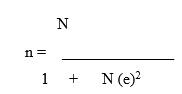
Yamane (1967:886) formula.
Where n is the sample size, N was population (h/h) size engaged in cattle grazing, and e the level of precision.
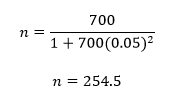
The sample size used for the study was 255 respondents.
Demographic characteristics of the respondents.
Gender of respondents
Results show a disproportionate gender representation of respondents in Kabale Municipality with more participants (70%) being males compared to less than 30% female representation in the dairy farming.
Marital status of respondents
Findings of the study revealed more participants (78%) were married compared to less than 30% of respondents who were single, widowed or divorced. This could have an implication on responsibility sharing in as far as managing dairy farming enterprises are concerned.
Age of dairy livestock farmers’ respondents
The average age of dairy livestock respondent is 52 years with standard deviation of 14. This is an indication of dairy engagement in an advanced age which could in the long run have an implication on the output of the enterprises. This is further highlighted in the figure below highlighting few youths (26-35 years of age) shunning the enterprise which compromises the future of farming.
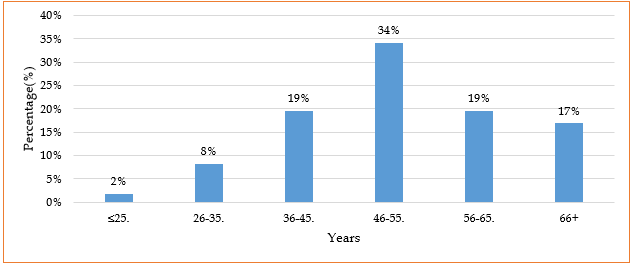
Figure 1. Age group of respondents in the study area.
Education levels of respondents
Results indicate that the biggest number (34%) of respondents only completed primary level education compared 33% of respondents who went up to tertiary level of education. A small number of respondents (5%) never attended school at all. The education level plays a significant role in comprehending and following all the business practices on and off the farm which translates into how profitable the business is likely to be.
Land ownership for Agriculture
The study revealed that majority of the respondents (84%) own the land on which their agricultural enterprises are taking place in the study area compared to less than 20% who do not own the land they use for farming. This could have implications regarding long term improvement measures that could be carried out on such farms. Respondents, who did not own land, had other alternative ways of accessing land and the majority of such land (72%) was mainly family land and renting.
Farmers’ knowledge of dairy zero grazing
The first objective of the study was to assess the farmers’ knowledge of dairy zero grazing in the study area. General knowledge, knowledge gaps and sources of knowledge in the study area were tested.
Factors influencing knowledge levels of farmers
Bivariate logistic regression analysis was done to determine the potential factors influencing farmers’ level of knowledge about dairy cow zero grazing in Kabale Municipality.
The results show that with the exception of farmer's education (primary) all other variables in the model had no statistical significance on influencing farmers’ knowledge about dairy zero grazing (P < 0.05). The odds ratios for primary education, farmer's attitude and practice of zero grazing were 84.0, 9.467, and 195.38 respectively. The odd ratios mean that; farmers with primary education were 84times more likely to be having knowledge about zero grazing than those who were at other levels of education, farmers who would engage and practiced dairy zero grazing were 9.467 times and 195.38 times respectively more likely to be having knowledge dairy zero grazing than those who would not engage and practice dairy zero grazing, having allowed for all other variable factors in the model.
Respondents’ general knowledge about dairy zero grazing
The majority farmers (80%) claimed to have knowledge about zero-grazing compared to 20% who did not. The existing knowledge was particularly in: basic housing; zero-grazing benefits; zero grazing challenges; basic feeding; definition and management practices; and zero-grazing requirements. It was also important to identify knowledge gaps existing among the respondents as well. Over 80% of respondents recorded some knowledge gaps about zero-grazing compared to 17% who did not have any knowledge gaps in the enterprise.
Following the above finding, ten basic knowledge aspects of zero-grazing were tested among the respondents to find out where the gaps were mainly and these included: feeding techniques; general knowledge of zero grazing; health management; pasture improvement; breed identification; animal housing and construction; heat detection; record taking and keeping; genuine animal drug identification; and artificial insemination. The results revealed that the biggest gap was in better feeding practices (24%) and health management along with general knowledge about zero-grazing both at 16% of the respondents.
Common practices in zero grazing
The basic common zero grazing practices were found to include feeding, breeding, housing or shelter shed, health management and milk handling.
Practices by zero grazing farmers
A big number of farmers (78%) used water adlib for feeding their dairy zero grazed cattle as compared to other feeding practices which were below 50%. Most of the farmers (60%) used bulls for breeding as compared to other methods used for instance embryo transfer was never used in cow breeding. Most of the farmers used temporary housing/shades (62%) for their zero grazed animals. All other kind of housing modes were `not optimally utilized as their usage was below average. A big number of farmers sprayed (87% and had crushes (55%) for their zero grazed cattle. Other health management practices were not well utilized as they ranked below average for instance quacks which were never used at all. Most of the farmers handled their milk in clean containers (91%) and had milk strainers (78%). The other milk handling practices were not well utilized. On the average, farmers disposed their wastes directly into the field (51%). The other waste disposal mechanisms like biogas production and keeping them in pit were underutilized.
Zero grazing management
A big number of farmers (78%) used water adlib for feeding their dairy zero grazed cattle as compared to other feeding practices which were below 50%. Most of the farmers (60%) used bulls for breeding as compared to other methods used for instance embryo transfer was never used in cow breeding. Most of the farmers used temporary housing/shades (62%) for their zero grazed animals. All other kind of housing modes were `not optimally utilized as their usage was below average. A big number of farmers sprayed (87% and had crushes (55%) for their zero grazed cattle. Other health management practices were not well utilized as they ranked below average for instance quacks which were never used at all. Most of the farmers handled their milk in clean containers (91%) and had milk strainers (78%). The other milk handling practices were not well utilized. On the average, farmers disposed their wastes directly into the field (51%). The other waste disposal mechanisms like biogas production and keeping them in pit were underutilized.
Challenges of zero grazing enterprises
Feeds and feeding: Most dairy cattle zero grazing farmers faced the challenges of; inadequate animal feeds particularly during dry spells (29.2%), the venture being expensive (27.2%), and pests and diseases (23.8%).
Pests and diseases: The zero grazing farmers in the study area presented nine diseases threatening their enterprises. Most of the zero grazed cattle were affected by; mastitis (71.6%), East coast fever (71.1%) and calf scour (58.3%). Animal diseases was one of the major threats to running zero grazing as a business in terms of spending too much on animal treatment (60.5%), low milk yield (27.8%) and death of the animals (27.3%) in some cases.
Factors influencing adaption of zero grazing
Perceptions about zero grazing: The study reveals that the majority of respondents were open to engaging in zero-grazing because of its profitability, variable benefits, accumulation of manure and ease of control of diseases. The concern was however expressed again by the majority of respondents about the laborious nature, time demanded, and capital-intensive nature of zero-grazing. Some respondents (Between 3-10% across all attributes) did not have a position regarding engagement of zero-grazing as a business.
Felt reasons for non-adoption: The non-practicing farmers were then engaged to provide a basis for understanding why they were not engaging zero-grazing as an enterprise. The majority of the farmers (over 70%) did not engage zero grazing enterprise due to cost of managing the enterprise and land related challenges. Knowledge related reasons only contributed 4% of the reasons for not engaging the enterprise.
Demographic influencers of adoption
Education: The study finds a significant relationship (p=0.008) between levels of education and dairy zero grazing practice. Most educated people tend to practice dairy zero grazing than the least educated or no education.
Age: There is no a significant relationship (p=0.540) between age category and dairy zero grazing practice. A big percentage of respondents across all age categories highly practice dairy zero grazing.
Knowledge: There exists a significant relationship (p=0.001) between having knowledge about dairy zero grazing and its practice. Majority of the respondents who have knowledge about dairy zero grazing (92%) practice it as compared to those without any knowledge.
Relationship between gender, age and knowledge of respondents and zero grazing practice in the study area
The results of the study show no a significant relationship (p=0.320) between gender and dairy cattle zero grazing practice. Both males (81%) and females (72%) highly practice dairy cattle zero grazing.
The first research objective was to find out about the level of knowledge in the zero grazing enterprise. Research findings show that 80% of the dairy farmers in the study area had basic knowledge about zero-grazing as an enterprise but in-depth knowledge of the enterprise was still lacking. Most other studies reviewed focused on specific zero grazing knowledge as with (J Nalunkuuma et al, 2015) who observed on average, farmers’ composite knowledge score of cattle reproductive parameters ranged from 4.7% to 18%. This shows that most zero grazing farmers are not sufficiently equipped with specific zero grazing management knowledge. It was observed in this study that farmers had limited awareness about practices such as use of laboratory services before treatment, use of biosecurity measures and use of trained casual laborers which possibly explains why zero-grazing management knowledge is lacking. This study established that the greatest knowledge gaps farmers’ had proper feeding practices (24%) and health management along with general knowledge about zero-grazing both at 16% of the respondents. This is a fact also established by Holohan et al., (2021) where he found quality knowledge requirement availability from respondents to show 39% saying it was poor, 20% very poor, 31.5% okay, 8% good and only 1.5% saying it was excellent. This finding is consistent with this researcher’s study which shows over 80% of the respondents having knowledge gaps with only 17% of respondents having no knowledge gaps.
The education level, knowledge, and perceived benefits of respondents influenced adoption and practice of zero grazing in the study area. This finding is in agreement with the study Amir (2006) which stated that having knowledge about zero grazing showed a significant relationship with practice and the same applies to the level of education.
The lack of sufficient knowledge requirements and availability of quality information brings about the challenges faced by farmers in zero grazing enterprise as the study revealed dairy cattle zero grazing farmers faced the challenges of low milk yield (27.8%) and death of the animals (27.3%) and pests and diseases (23.8%). Animal diseases was one of the major threats to running zero grazing as a business in terms of spending too much on animal treatment (60.5%).
The second objective of this study sought to find out the common practices carried out by zero grazing farmers to this end our results show feeding, breeding, housing, health management and milk handling were the most commonly practiced activities in the zero-grazing enterprise. With regards to feeding practice 78% of farmers used water adlib for feeding their dairy zero grazed cattle, this finding was not surprising as most farmers’ basic knowledge involves provision of water adlib for feeding. On breeding this study established that 60% used bulls for breeding as compared to other methods used for instance embryo transfer was never used in cow breeding. Again the breeding practice is expected as knowledge common amongst most farmers as they have not been sufficiently exposed to other technological methods such as embryo transfer as was noted that technology adoption is low (Getachew & Tadele, 2015) and this is not primarily due to lack of technologies but due to the fact that different technologies have different benefits to different target groups (Gunte, n.d.).
Farmers mainly used temporary housing/shades 62% for their zero grazed animals according to this study although Chenyambuga and Mseleko, (2009) finds more than 90 percent of the small-scale dairy cattle farmers live in the medium and low-density areas and use their residential units as places where dairying is carried out.
This study established that farmers sprayed (87%) and had crushes (55%) for their zero grazed cattle. Other health management practices were not well utilized this is attributed to lack of knowledge and sufficient studies in this area of zero grazing practice. It was encouraging to find that a big number of farmers handled their milk in clean containers (91%) and had milk strainers (78%) although other milk handling practices were not well utilized.
The lack of sufficient funding and resources brings about the challenges faced in zero grazing practices as the study revealed dairy cattle zero grazing farmers faced the challenges of; inadequate animal feeds particularly during dry spells (29.2%), the venture being expensive (27.2%), Whilst this researcher findings on practice challenges mostly point towards feeds and pests, a similar recent study by Holohan et al.,(2021) indicated that additional time and lack of skilled labour input was the main challenge in addition to costs affiliated to zero grazing and cost of running and maintaining machinery. In the same study he records respondents using 55% farmer owned purpose-built machinery and 43% respondents hiring a trained/skilled farmer. This also is consistent with this researcher’s findings which indicated that 38% of respondents said zero grazing was too expensive to manage and 35% of the respondents said they had limited land or no land at all. This therefore points to the reason why fewer farmers engage in the practice of zero grazing enterprise.
On the third objective regarding factors that influence adoptation of zero grazing as an enterprise, the study revealed that the majority of the farmers (over 70%) did not engage zero grazing enterprise due to cost of managing the enterprise and land related challenges. Knowledge related reasons only contributed 4% of the reasons for not engaging the enterprise. In comparison, Holohan et al., (2021) notes that 69% of the respondents engaged in regular zero grazing farming for an average of five (5) years, 20% were occasional, whilst 11% were once off zero grazing farmers. Although the referenced study indicated a high number of respondents engaging in the zero grazing on Irish dairy farms, these were mostly short term indicating that factors influencing the adaptation and non-adoption varied widely and are unique to individual circumstances and environment.
Perceived benefits and challenges also contributed to adoption of zero-grazing practice. A dairy farmer is likely to adopt zero-grazing system with fewer perceived challenges whilst a farmer who perceives more challenges is unlikely to pursue zero grazing farming.
Land as a factor of production and storage of wealth is the most important asset influencing adoption (Shively, 1999). This assessment is in agreement with the study where it was found that 35% of respondents affirmed that lack of land accessibility was the biggest factor for their non-adoption. That was the second most mentioned factor after the factor of zero grazing maintenance expenses at 38%. Land has become more and more scarce and expensive over the years limiting the practice of zero grazing.
In the study it was established that most educated people tend to practice dairy zero grazing than the least educated or no education at all. This narrative is supported by Lioberger and Gwin, (1991), slow rate of adoption is due to how the skills are relayed from the institution rather than unwillingness of the farmer to adopt the improved technology.
According to Amir and Pannel (1999), older farmers have more experience, resources and authority that would give them more possibilities for trying new innovations. This finding is disputed in this study which finds that there is no a significant relationship between age category and dairy zero grazing practice. A big percentage of respondents across all age categories practice dairy zero grazing. However, Dogde (2006) argued that though older have experience and resources, their receptivity to new ideas and technologies typically decreases with age. While, Nkonya and Norman (2003) concluded that the effect of age on adoption tended to be technology and location specific.
As with every study numerous challenges were encountered by the researcher. The limitations of this study included the fact that some people who could be a source of reliable data were uncomfortable with providing information due to trust and confidentiality issues.
However, the researcher managed to keep such non-participation numbers minimal by explaining the right to privacy and confidentiality thus persuading more people to take part in this study. In addition, the restricted movement imposed by Government authorities as part of COVID-19 control measures limited the researcher’s efforts during data collection hence the whole research process beyond expected period. The researcher managed the restrictions by getting permission from enforcement authorities, donning an identification tag and making house to house visits within the acceptable hours of the day.
The researcher concludes that the average age of zero grazing practitioners is 52 years and that youth in the age bracket of 26-35 years are shunning away from the enterprise. Such advanced age engagement could in the long run have an implication on the numbers involved in and thus performance of the dairy production sector.
A percentage of 80% of the dairy farmers in the study area demonstrated having basic knowledge about zero-grazing but lacked advanced technical knowledge in feeding techniques; disease identification and health management; breed identification; and shed construction.
Common practices in zero grazing involved feeding, breeding, housing, health management, milk handling and waste disposal. These differed with farmers’ gender level of education land availability and income sources in a household.
Adoption of zero grazing dairy production differed across gender and education levels and was particularly affected by cost of managing the enterprise and land related challenges.
The perceptions attributed to adoption of zero-grazing were high profitability, minimal space requirement and negative perceptions that hindered adoption were laborious nature of the enterprise, excess demand on time and high cost incurred in starting up a zero grazing practice. Such perceptions were significantly influenced by land ownership and size of land available for production.
I give special gratitude to almighty God for all this work and special thanks go to my supervisors, employer, farmers and family.
Select your language of interest to view the total content in your interested language