 ...the monthly, Open Access Publisher.
...the monthly, Open Access Publisher.
...the monthly, Open Access Publisher.
Case Report - (2025) Volume 13, Issue 1
Received: 25-Sep-2024, Manuscript No. IJOG-24-148853; Editor assigned: 30-Sep-2024, Pre QC No. IJOG-24-148853 (PQ); Reviewed: 15-Oct-2024, QC No. IJOG-24-148853; Revised: 14-Feb-2025, Manuscript No. IJOG-24-148853 (R); Published: 21-Feb-2025
We present a case of massive hematemesis due to a bleeding gastric Dieulafoy’s Lesion (DL) in a 30 weeks’ pregnant patient. DL is in an abnormally large diameter artery which runs within the submucosal layer of the gastrointestinal or respiratory tracts; DL can rupture causing a potentially life-threatening hemorrhage. To date, only three cases of bleeding DL in pregnant patients have been reported in the literature. Although DL is not frequently encountered in young women, pregnancy can be a predisposing factor. DL diagnosis is often insidious in our case since the extensive bleeding could not allow proper visualization, two esophagogastroduodenoscopies and one angiography were necessary to eventually detect the lesion. Combined endoscopic therapy with local epinephrine injection and endoclip placement was needed to stop the hemorrhage allowing successful treatment of our patient. The patient was able, one year and three months later, to carry a subsequent pregnancy to term and deliver a healthy child without any gastroenterological event.
Hematemesis, Gastroenterological, Pregnancy, Esophagogastroduodenoscopies, Dieulafoy’s Lesion (DL)
Dieulafoy’s Lesion (DL) consists in an abnormally large diameter artery that runs a tortuous course within the submucosal layer of the Gastrointestinal (GI) tract and typically protrudes through a small mucosal defect [1]. DL can rupture causing a massive and potentially life-threatening GI hemorrhage. Although DL may develop anywhere throughout the entire GI tract, in most cases (75%) it is located in the gastric fundus [2]. Even more rarely DL can develop in the bronchial wall, in which case it can cause massive hemoptysis [3].
To date, only two cases of bleeding gastrointestinal DL and one case of bleeding bronchial DL in pregnant women have been reported.
A 42-year-old Caucasian woman gravida 4, para 2 (one spontaneous first trimester miscarriage and two uncomplicated full-term pregnancies) with no previous reported surgeries nor pathologies, except for a chronic thyroiditis currently under treatment with Levothyroxine, was referred to our Emergency Department 30 weeks pregnant due to massive hematemesis.
At her arrival blood pressure was 75/45 mmHg, heart rate was 90 bpm, satO2 was 99%, body temperature was 36°C and she was hyperventilating (20 rpm). Her hemoglobin (Hgb) was 10.4 g/dL, except this her laboratory examinations were normal.
After first aid support a first obstetric ultrasound assessment was made: fetus was in vertex position, placenta and amniotic fluid were normal, and fetus’ active movements and heart rate were regular.
Shortly after, a new episode of massive hematemesis occurred.
The patient was then re-evaluated and cardiotocography was performed (Figure 1). After 8 minutes of persistent fetal bradycardia, the decision of delivering the fetus with an emergency c-section was taken.
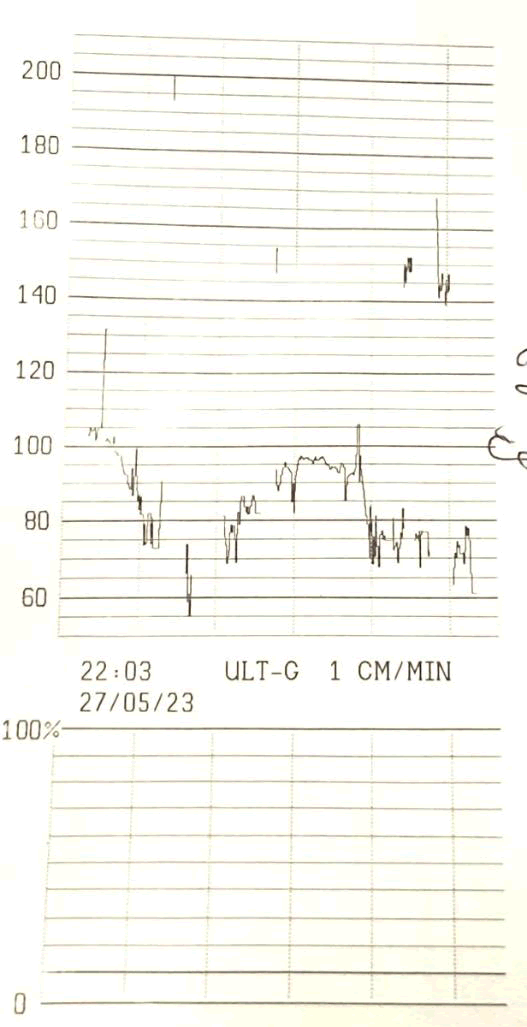
Figure 1. Cardiotocography showing persistent fetal bradycardia; paper speed 1 cm/min.
The patient entered the Operating Room (OR) for a contemporary C-section and Esophagogastroduodenoscopy (EGD) under general anesthesia.
A 30+0 weeks of gestational age male newborn was delivered after 2 minutes, with Apgar score of 1-5-7 at 1-5-10 minutes. In the meantime, EGD was performed. After multiple washings and aspiration of the gastric hematic content, despite changes of the patient’s position, the bleeding site was not identified. A CT-angiography was then performed; however, no active bleeding was evidenced. Straight afterwards, a second EGD was performed and, after removal of blood clots, a bleeding DL was eventually identified on the anterior wall of gastric fundus (Figure 2). Epinephrine was injected, and over-the-scope endoclip was placed obtaining hemostasis (Figure 3).
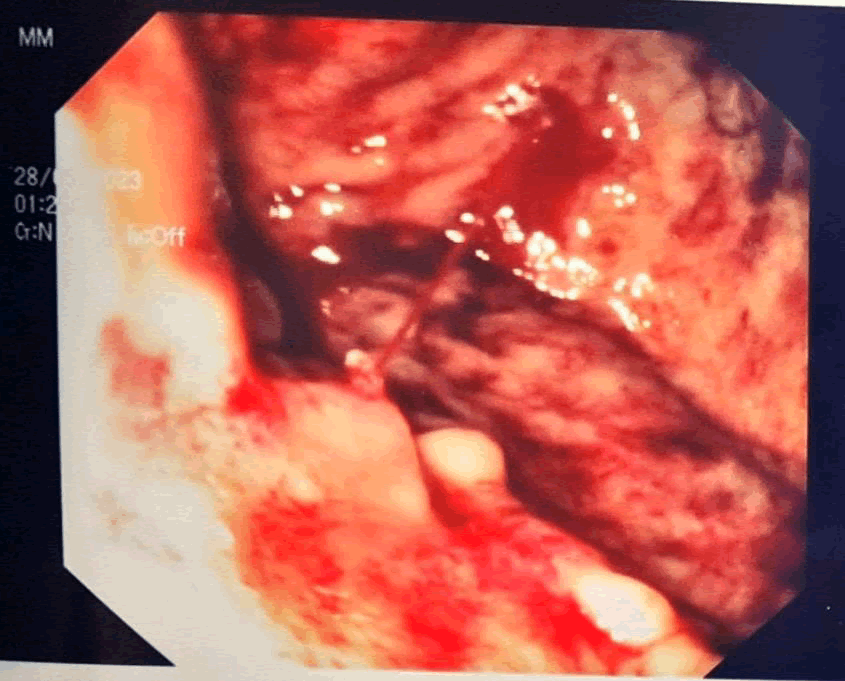
Figure 2. GI endoscopy showing active bleeding from DL.
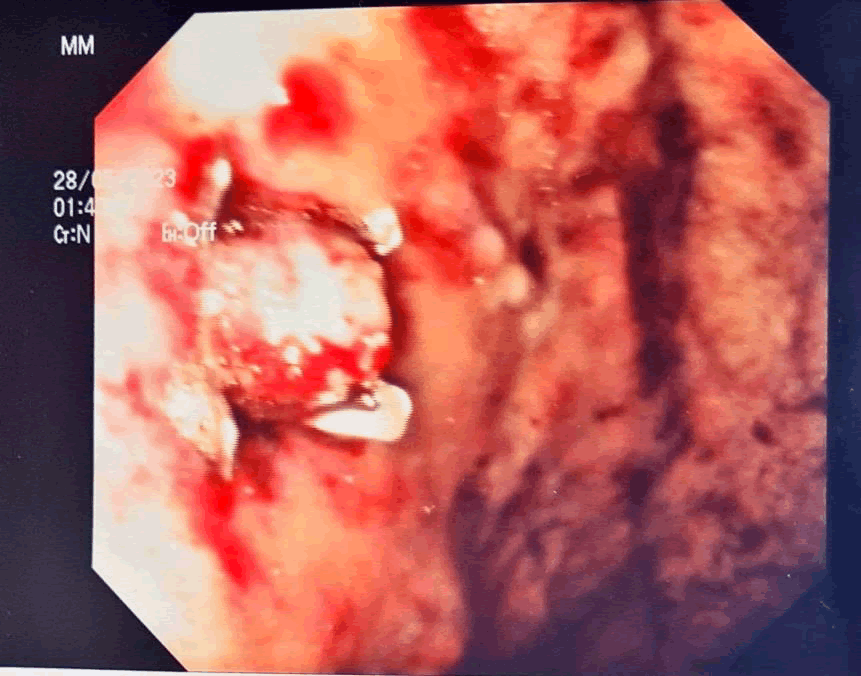
Figure 3. GI endoscopy showing treated lesion and obtained hemostasis.
A Nasogastric (NG) tube was then placed, and intravenous Proton-Pump Inhibitors (PPIs) were administered.
Newborn birth weight was 1360 gr. Umbilical blood gas analysis showed severe acidemia: Venous pH was 6.758 and Base Excess (BE) was -23 mEq/L, arterial pH was 6.739 and BE was -24 mEq/L. He was born in poor condition with severe bradycardia, apneic and atonic. He was immediately intubated, with improvement of the heart rate, stabilized and admitted to neonatal intensive care unit. He developed severe respiratory distress syndrome, hypotension, large patent ductus arteriosus, liver and kidney disfunction. At 36 hours he had a sudden worsening of his condition caused by severe pulmonary hemorrhage, acute anemia, bilateral Intraventricular Hemorrhage (IVH) with grade-III IVH on the left side and grade-IV IVH involving the periventricular parenchyma on the right. Shortly after he passed away due to cardiac arrest, despite cardiopulmonary resuscitation.
The morning following intervention the patient’s blood exams showed hypofibrinogenemia (189 mg/dL) and anemia (Hgb was 7.1 g/dL) and 3 blood units were transfused.
After 24 hours of fasting she was put on a cold liquid diet while intravenous PPIs were continued; her Hgb was still low (6.8 g/dL), and 2 more blood units were transfused.
After 2 more days the NG tube was removed, PPIs were administered orally, and creamy warm diet was started. She had an uneventful puerperium and was discharged a week later with oral PPIs, iron supplementation and heparin injections for antithrombotic prophylaxis.
One month after discharge, the patient underwent a gastroenterological follow-up visit to which she presented herself asymptomatic; at one month, the patient’s blood exams showed normal Hb levels.
Six months later another gastroenterological visit and EGD were performed showing regular findings, no GI bleeding and correcty placed over-the-scope endoclip. PPI therapy was suspended.
The patient got pregnant seven months after the previous birth. The pregnancy was uneventful and she delivered via c-section a healthy full-term child.
Written consent from the patient was obtained for the collection of data and the writing of the article.
DL is a rare cause of GI bleeding accounting approximately for 1.5% of all GI hemorrhages [4]. Over the past decades, respiratory tract DL has also been increasingly recognized as a cause of hemoptysis [3].
GI DL usually affects elderly patients, mostly advanced age men, usually under treatment with non-steroidal anti-inflammatory drugs, aspirin or warfarin. Significant comorbidities such as cardiovascular or respiratory disease, chronic renal failure, liver cirrhosis and diabetes are described in 90% of cases. Our patient’s medical history was unremarkable and she was not taking antiplatelet or anticoagulant drugs.
Moreover, DL diagnosis is insidious: The lesion is not recognized in 30% of patients during the first GI endoscopy and in 6% of cases three or more EGDs are required to establish the diagnosis [2]. In specific cases, it is also necessary to perform angiography to accurately localize the lesion [2]. In our case, since the extensive bleeding could not allow proper visualization of the lesion, two EGDs and one angiography were necessary in order to eventually detect DL and successfully treat the patient.
Treatment of a bleeding DL is also complex and only in the last decade’s endoscopic technical improvements have led to a significantly reduced mortality rate, decreasing from 80% to 9%-13% [5]. Furthermore, combined endoscopic therapies (local epinephrine injection and endoclip placement, as in our case) are encouraged as monotherapy burdens higher risk for recurrent GI hemorrhage. Our patient did not experience any symptom of rebleeding in the follow-up and was able to carry a subsequent pregnancy to term and deliver a healthy child.
Only three other cases of bleeding DL in pregnant patients have been described in the literature [6,7,10].
The first case described was a 31 weeks’ pregnant woman admitted to Gastroenterology Department with hematemesis and melena due to DL erosion; 8 years earlier she had experienced multiple GI hemorrhages leading to a diagnosis of gastric DL and endoscopic treatment with endoclips.
The second case described was a 9 weeks’ pregnant woman who was referred to ED due to sickness, syncopal episodes and melena in the previous two days and was eventually diagnosed with a bleeding DL [7].
The third case described was a 29 weeks’ pregnant woman admitted to hospital for massive hemoptysis and dyspnea due to DL bleeding in the trachea, completely obstructing the airway, requiring intubation and VV-ECMO [10].
Although young women are not frequently affected by the bleed of an already existing DL, pregnancy can be a predisposing factor: The enlarged uterus can cause gastric compression that, in addition to the action of progesterone, can bring to delayed gastric emptying and retention of gastric juice and food that may result in damage to the mucous membrane, leading to DL bleeding [6].
Also, renal, cardiac, and hemodynamic changes that happen in pregnancy, such as plasma volume, cardiac output and heart rate increase and vascular resistance decrease, could contribute to the activation and rupture of a silent DL [7,9].
Only two other preterm neonates born by emergency C-section from mothers with bleeding DL were reported: one was 29+0 and the other one was 31+4 weeks of gestational age [6,10]. Both newborns survived, but very little information is available about prenatal care and postnatal course. It is not known whether the neonates suffered from perinatal asphyxia, as umbilical cord gases and the need of neonatal resuscitation were not reported.
Our case unfortunately reported a poor neonatal outcome, mainly due to severe perinatal asphyxia occurred in a very low birth weight preterm infant [11].
The rarity of DL during pregnancy could not permit to define a well-established protocol of prevention and management of this still severe life-threatening disease.
This research was conducted in accordance with the principles of the Declaration of Helsinki, and the patient provided informed consent.
In conclusion, gastric Dieulafoy’s lesion, though rare, can present as a life-threatening cause of hematemesis in pregnant women. This case underscores the importance of early recognition and prompt intervention, including endoscopic hemostasis, to manage gastrointestinal bleeding in pregnancy. Given the physiological changes during pregnancy and the potential risks to both mother and fetus, a multidisciplinary approach is essential. Literature review supports the need for heightened awareness of this condition in pregnant patients, and further studies are necessary to refine management strategies and improve outcomes in such critical cases.
All authors declare that they have no conflicts of interest.
[Crossref] [Google Scholar] [PubMed]
[Crossref] [Google Scholar] [PubMed]
[Google Scholar] [PubMed]
[Crossref] [Google Scholar] [PubMed]
[Crossref] [Google Scholar] [PubMed]
[Crossref] [Google Scholar] [PubMed]
[Crossref] [Google Scholar] [PubMed]
[Crossref] [Google Scholar] [PubMed]
[Crossref] [Google Scholar] [PubMed]
[Crossref] [Google Scholar] [PubMed]
[Crossref] [Google Scholar] [PubMed]
Select your language of interest to view the total content in your interested language